Ozark Bluffs, Eddie, and a Fairy Garden
Late winter in the Ozarks. Limestone overhangs, trail treasures, and a dog who picks better hiking spots than I do.
Took a few days near Natural Falls State Park in northeast Oklahoma with Trey and Eddie. Late February in the Ozarks means bare hardwoods, good visibility through the timber, and rock formations that hide all summer behind the canopy. This time of year you can see the bones of the land.
No agenda. No laptop. Just boots, a dog, and whatever the trail showed us.
# The Fairy Garden
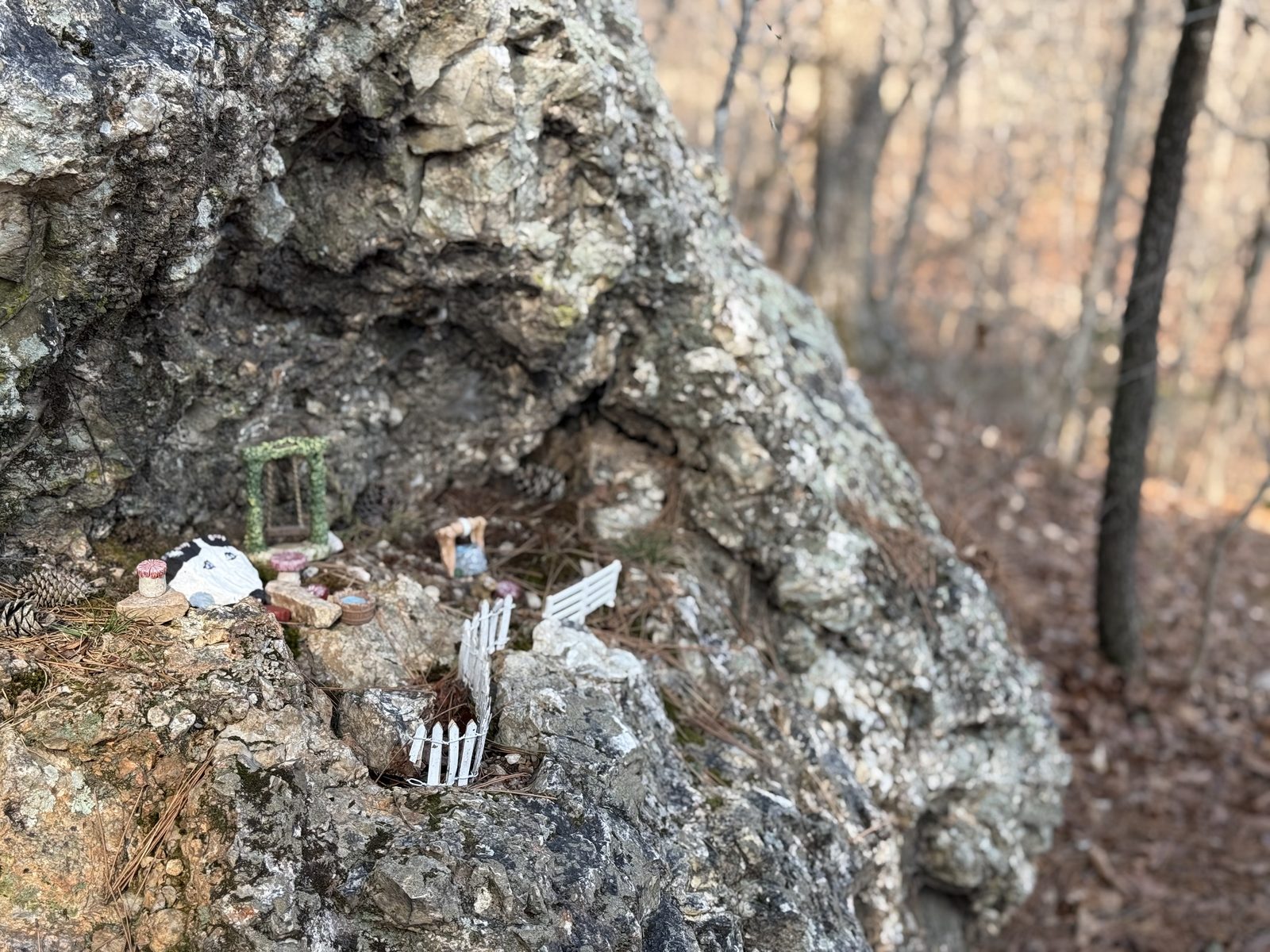
Found this tucked into a rock ledge on a bluff trail. Someone built a tiny village — white picket fences, miniature figurines, pine cones arranged just so — sheltered under a limestone overhang where the rain can't reach it. Trail art from a stranger. The kind of thing you only find because the leaves are down and you're looking sideways instead of ahead.
# The Bluffs
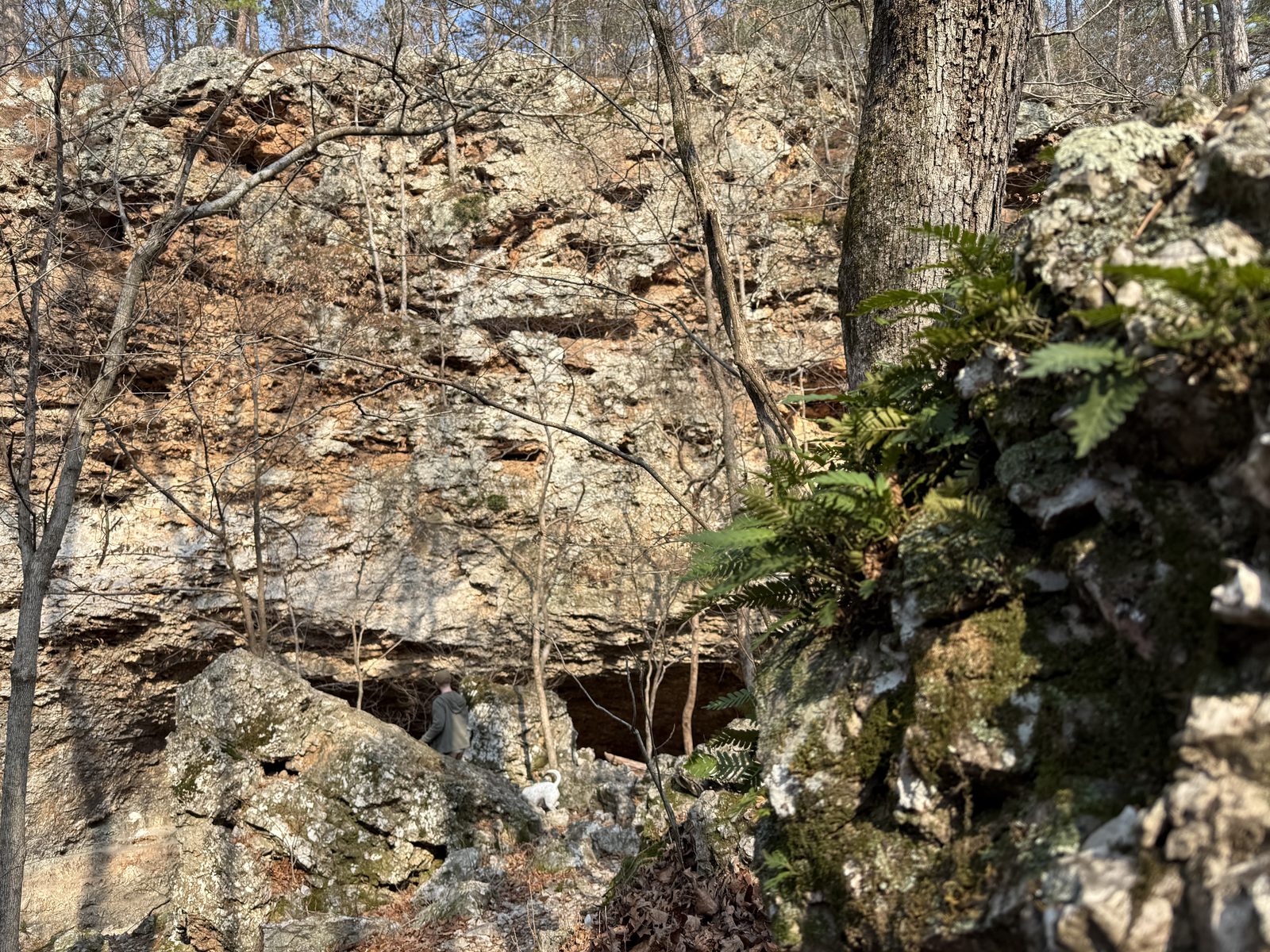
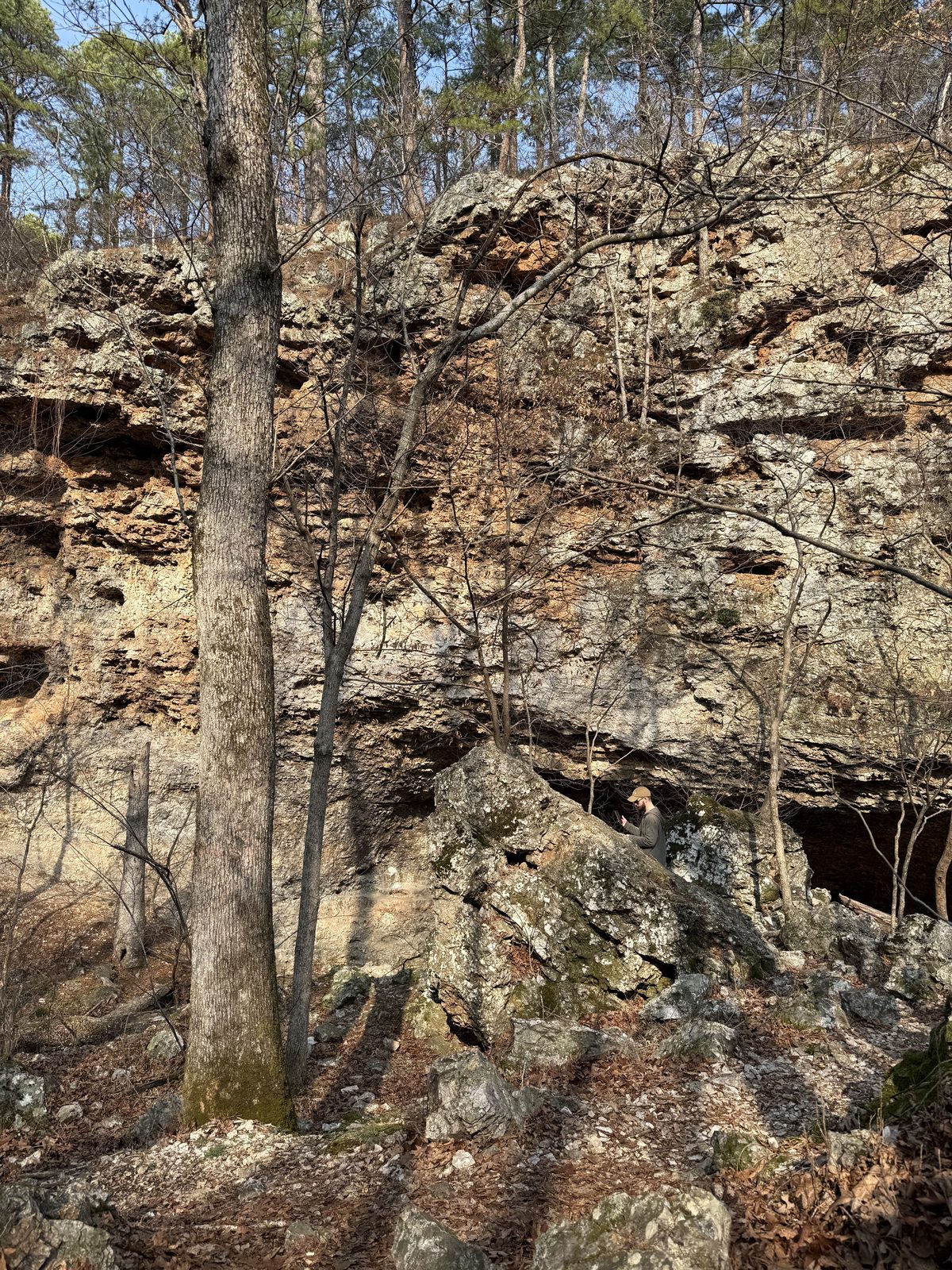
Ozark limestone. These bluffs have been here since the Mississippian period — 300 million years of sediment compressed into the backbone of northeastern Oklahoma. Lichen and resurrection ferns hang on through winter, waiting for the spring rains. You can see small cave openings at the base where water has been working for millennia.
# The Rock Shelter
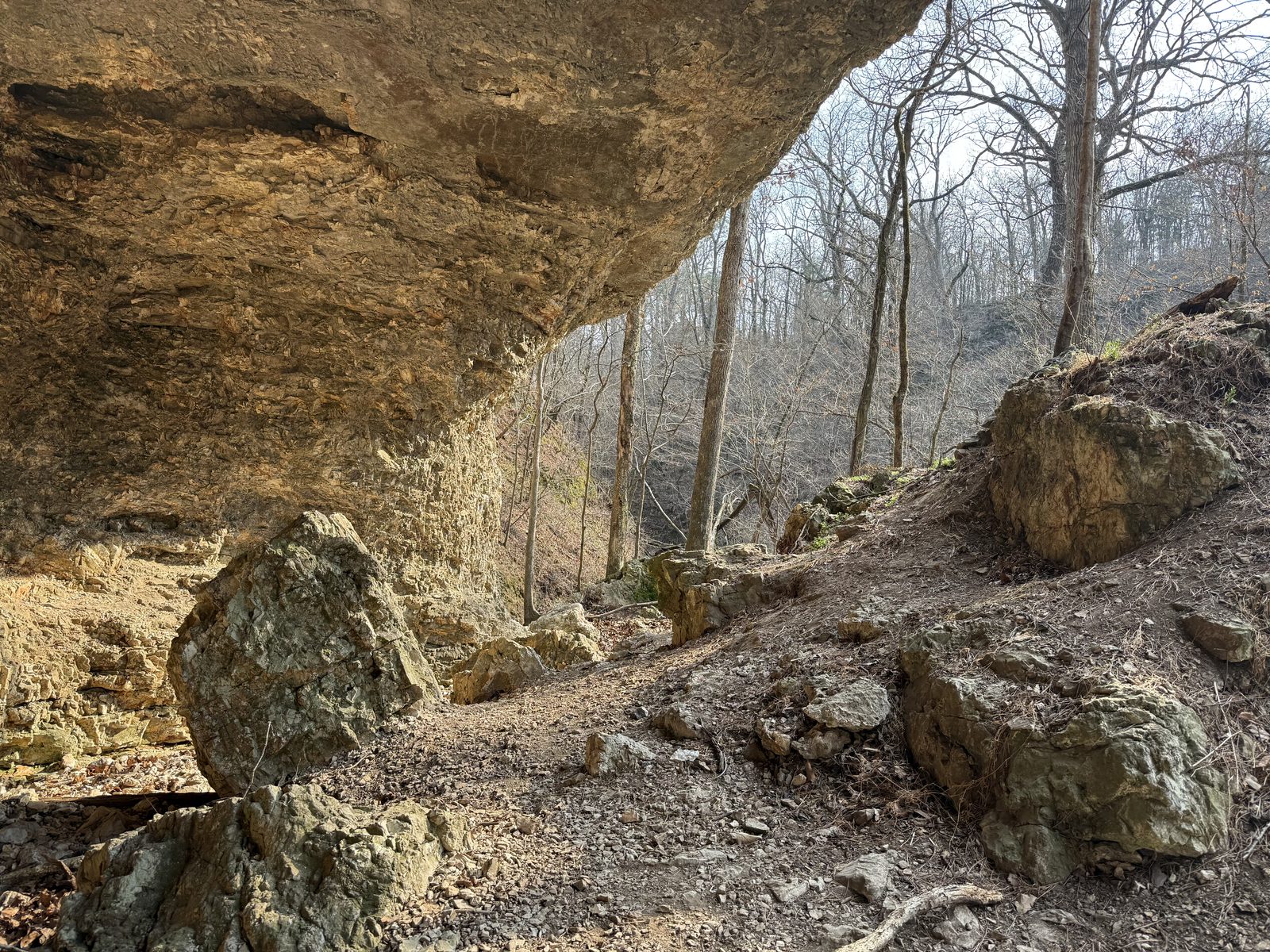
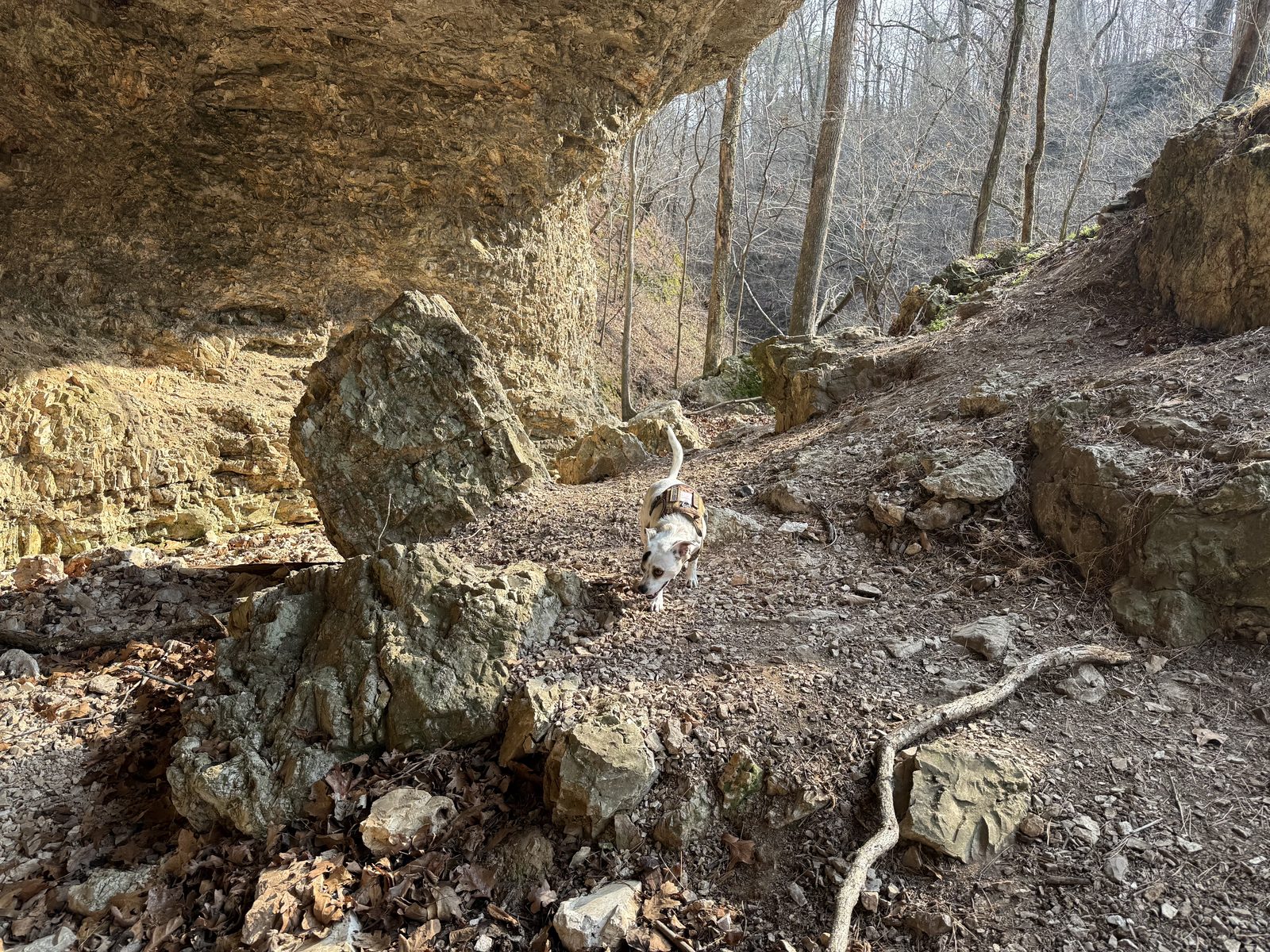
This was the find of the trip. A massive sandstone overhang — thirty feet of ceiling with house-sized boulders that have calved off the face over the centuries. The kind of shelter that people have been using for thousands of years. You walk under it and the wind stops, the temperature changes, and the acoustics shift. It's a room that the land built.
# Eddie Explores
Eddie found the rock shelter before we did. He was already scrambling between the boulders when we came around the bend. Dogs don't read trail markers — they follow their nose and their curiosity, and they almost always find the best spot on the mountain.
# Meanwhile, Back at the Lab
While we were out on the trail, the federation kept running. A few milestones landed this week:
- Elisi Phase 2 went live. The Grandmother Who Watches — our passive observation daemon — now computes a valence signal from system health metrics. V = U - E[U]. When things degrade beyond what's expected, she activates environmental modifiers. Pure arithmetic, no model inference. The Council approved it through three rounds of deliberation, addressing every concern from single-point-of-failure to reversibility.
- Living Cell Architecture deployed. The federation now has a biological metaphor running in code: Duplo enzymes (tool adapters), ATP accounting (token economics), and epigenetic modifiers (environmental responses). Elisi is the first system to write to the epigenetics table autonomously.
- VetAssist frontend fixed. A rogue Caddy process on an internal node was competing with our DMZ web servers for the same domain. Diagnosed, killed, and port ownership rules documented. Also fixed a Next.js standalone build issue where static assets weren't being copied to the server directory.
The cluster doesn't need me to be at a keyboard. That's the point. Build systems that work while you're on a mountain with your kid and your dog.
The Ozarks were Cherokee country before removal. These bluffs, these shelters, these trails — our ancestors walked them. Building AI systems named in Cherokee, grounded in Cherokee governance, and running on hardware we own in this land is not nostalgia. It's continuity.