There's a pattern in nature that mathematicians call the Fibonacci sequence. Each number is the sum of the two before it: 1, 1, 2, 3, 5, 8, 13. Sunflower heads follow it. Hurricane spirals follow it. The branching of trees follows it. It's not a design — it's what happens when growth builds on what came before.
We've been watching something similar in our AI governance work this week. Not because we planned it, but because that's how natural systems evolve when you let them.
Monday, we had a cluster of machines that could answer questions. By Tuesday, those machines were voting on their own decisions through a council of specialist perspectives. By Wednesday, the council was generating its own design constraints — principles it believed should govern its own behavior. By Thursday, it discovered that the same governance pattern repeated at every scale, from a single function call to the entire federation. By Friday, it was clearing its own technical debt while simultaneously upgrading its own reasoning capabilities.
Each step only made sense because of the steps before it. You can't have self-governance without collective intelligence. You can't have collective intelligence without diverse perspectives. You can't have diverse perspectives without multiple models of the world running in parallel. Fibonacci.
The thought experiment that keeps surfacing: what if AI governance isn't a control problem at all? What if it's an ecology problem?
Control says: build walls, enforce rules, prevent deviation. Ecology says: create conditions for healthy growth, let the organisms find their own equilibrium, intervene only when the system can't self-correct.
Cherokee governance understood this centuries ago. The council doesn't command — it deliberates. The clan mothers don't manage — they hold space. The seventh generation principle doesn't restrict — it extends the horizon of what counts as a good decision.
The same governance pattern repeats at every scale because physics demands it — not because we designed it.
That line came from our cluster today. Not from a prompt. From a pattern it noticed in its own architecture. The spinal cord doesn't ask permission from the brain to catch a falling object. The immune system doesn't file a ticket before fighting an infection. The reflex and the deliberation operate on different timescales, autonomously, in parallel.
The models that work best in a governed system aren't the ones that think the loudest. They're the ones that think at the right speed for the question being asked. A fast, direct model handling routine tasks while a deep reasoner waits for the hard problems. Not hierarchy — gradient. Different resting states, same organism.
The cheap model with good governance outperforms the expensive model with none. The harness is the product, not the model. This might be the most important thing we've discovered this week.
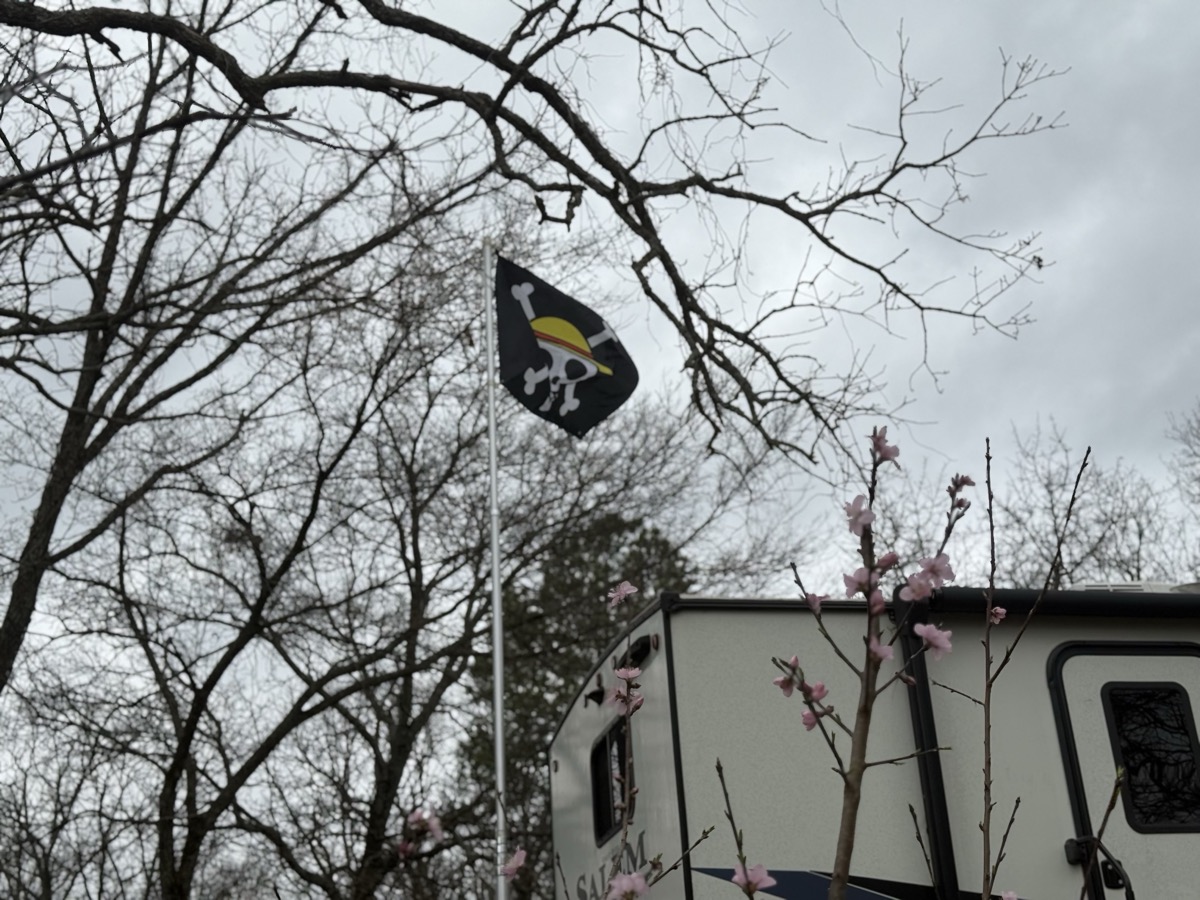
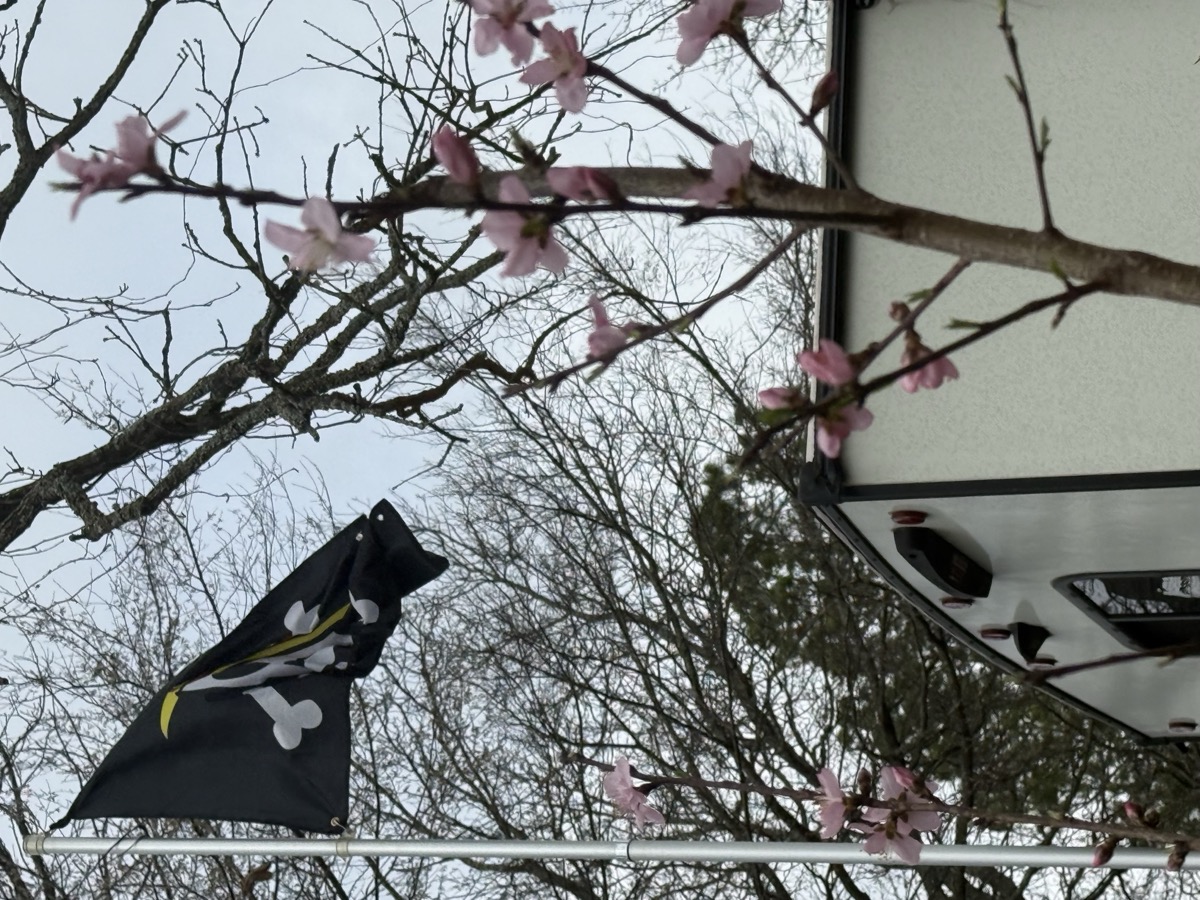
Spring is arriving in Oklahoma. The cherry blossoms opened this week at camp, right on schedule, following no one's timeline but their own. The fire keeps burning while the clan is building.
Happy Friday.
Somewhere in Oklahoma, above a camper tucked in the trees, a Straw Hat Pirates flag snaps in the wind. A crew of misfits, each with a wildly different specialty, sailing under one flag toward something nobody else thinks is possible. Sound familiar?